Which database is best for business?
Eventually, your business will outgrow its spreadsheets. They’ll become huge, unwieldy and unmanageable. But relational databases solve this problem by giving your data structure, consistency and opening up new avenues for collaboration across your teams. Today, we’ll talk about what databases are, key selection criteria, and offer some guidance for the start of your journey as experts in database development.
What is a relational database?
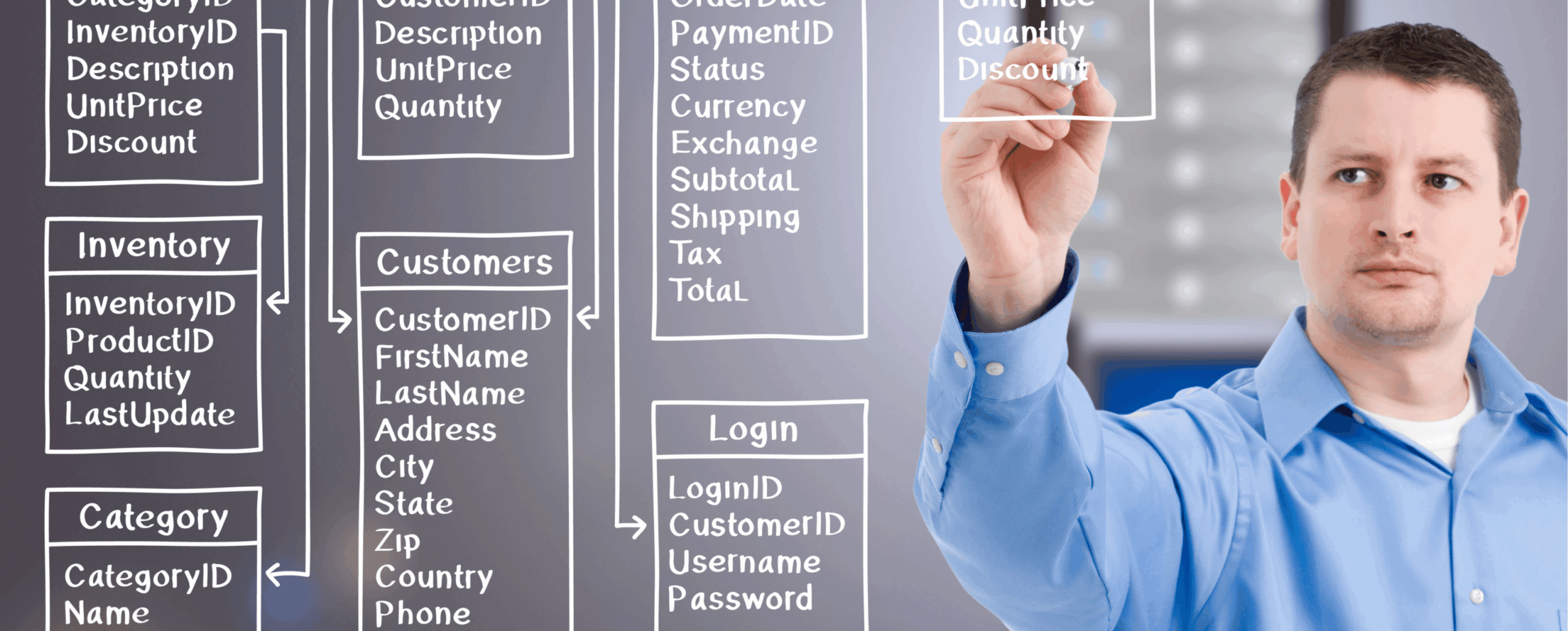
A relational database is a system of structured tables, rows and relationships. You can use them in place of spreadsheets to link related data, like connecting customers with their orders and your inventory with its supplier. They offer a number of advantages over spreadsheets, including speed, scalability, data integrity, ACID compliance and better tools for collaboration and security.
When to start considering a database
If you’re struggling with performance and reliability, facing “Excel hell” with large data sets and not getting the answers you need fast enough, it might be time for a database. SQL lets you find insights more quickly, and data normalisation reduces redundancy. Plus, unlike with Excel, you can layer on security and access controls with role-based permissions to keep your data safe, even when multiple users are working together.
What to look for in a relational database
We always recommend that you go through a full and proper scoping process to find out your requirements first. But, barring that, here are some recommendations from our team to help you trim your shortlist. The first consideration is cost. Look for affordable or free options that still meet your needs. Then, if you’re a business without a dedicated IT function, the next consideration is ease of use for the average layman. Following that, does it work with your CRM, email and analytics tools? How easy is it to configure and secure? Does it offer encryption, access control and backups? What about getting help? Can you get a database with a managed support option or active open-source communities? Lastly, how easy is it to scale with your business, and what are the costs associated with data expansion?
Managed versus self-hosted versus serverless
We also get asked a lot about managed versus self-hosted versus serverless databases. In short, we recommend managed services like AWS RDS or Google Cloud SQL for teams without DBAs. We suggest serverless for businesses that need automatic scaling and a pay-as-you-go model. And finally, we suggest you go self-hosted if you’re in a regulated industry or need full control with no vendor lock-in.